


The Baroviers: A family revolutionizes Murano glass
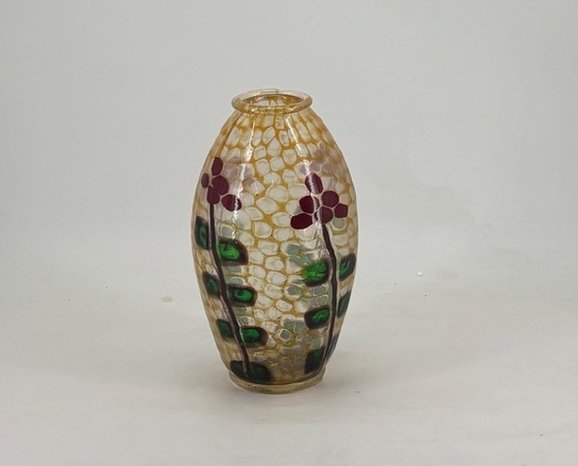
For connoisseurs and collectors like the Swiss Peter Grünbaum, Murano glass is a unique combination of design, art, and craftsmanship. The "pathological collector" is particularly fascinated by the extraordinary pieces of the Barovier family.
The Barovier family has had a significant influence on the history of glass art on the island of Murano, developing the craft over the centuries. Barovier & Toso, one of the oldest companies in the world, has its roots in 1295 and is known for its outstanding glasswork, particularly the "Mosaico" technique. This technique is a prime example of the technical and artistic mastery associated with the Barovier name.
The "Mosaico" technique, in which small pieces of glass called "murrine" are assembled to form elaborate mosaics, requires the utmost precision and craftsmanship. The murrine is created from glass rods that are melted in various layers and then cut into thin slices. This technique produces complex patterns with intense colors and fine details that are both visually and technically impressive.
A Mosaico work is created by heating the murrine on a flat surface until it fuses. The mosaic is then applied to a glass bubble, which is shaped by skilled glassblowers. The success of this process depends on precise temperature control: if the heat is too high, the pattern can be distorted; if it is too low, the glass pieces will not fuse properly. This process highlights the outstanding skill of Barovier's glass artists.
The "Mosaico" technique is not only remarkable from a technical point of view, but also for its artistic diversity. The colorful patterns can be created in a wide variety of shapes and designs—from floral motifs to abstract compositions. This versatility allows Barovier to combine both traditional and modern styles, and Mosaico works can be found in prestigious collections around the world. The way these glass works capture and reflect light gives them a dynamic quality that further enhances their visual appeal.
Barovier & Toso combine tradition and innovation.
Despite centuries of expertise, glass masters continue to create new interpretations of the mosaic technique. This continuous development is reflected in the innovative shapes and colors, ranging from classical vases to modern sculptures. The influences of the Italian Renaissance are also evident, particularly in the detailed mosaics that recall the historical works of art of this era.
Peter Grünbaum, a dedicated collector of glass objects for over 30 years, had the Mosaico objects in his extensive collection critically examined by the renowned expert Giancarlo Tosi, himself a native of Murano and one of the most recognized master glassmakers. His judgment confirms Grünbaum's opinion and emphasizes the uniqueness of the objects: "When I saw these rare mosaic vases, I was thrilled because you immediately recognize the characteristics of the original pieces, the 'dirty' glass. Back then, the kilns were fired with wood and coal, so the glass mass was contaminated with the carbonaceous residues of combustion, ash, and lapilli, which formed all these microbubbles. A few years ago, I happened to see a pair of mosaic vases that had been made recently. They were completely different: the murrines were all square and identical to those of an OCCHI vase by Scarpa. The glass was perfectly clean and clear, the surface perfectly smooth. In short, it was clearly visible that they were copies. Congratulations on your purchase!»
Mosaico: A unique legacy spanning eight centuries
The long history of the Barovier family begins with Jacobello Barovier, born in 1295 and considered the progenitor of the glassmaking family. His descendant, Angelo Barovier, developed the famous Cristallo glass in the 15th century, which was considered particularly clear, colorless, and transparent. This invention set new standards in glassmaking and cemented the family's reputation as pioneers in the field.
After the conquest of Venice by Napoleon in 1797 and its subsequent Austrian control, glass production on Murano suffered greatly. However, the Barovier family's knowledge and techniques survived. With the reunification of Venice with Italy in 1866, glass production experienced a renewed boom. During this time, it was Antonio Salviati who revived the craft and offered the Barovier brothers the opportunity to further develop their art.
In 1896, Benedetto, Benvenuto, and Giuseppe Barovier founded the company "Artisti Barovier." Giuseppe was considered one of Murano's most outstanding glass artists, particularly for his work in the mosaic technique. After the First World War, Nicolò and Ercole Barovier took over the management of the company, which was renamed "Artistica Barovier" in 1919. Ercole Barovier led the company with extraordinary creativity and created the famous "Primavera" series in 1929, whose glass pieces were notable for their thick, transparent walls with a network of bubbles and cracks. This technique has never been imitated, making the works from this series particularly valuable today.
The works of Barovier & Toso, particularly Ercole Barovier, continue to fetch high prices at auction today. A vase by Ercole Barovier from 1930 sold for $317,000 in 2014, underscoring the enduring value and significance of these glass works.
Barovier & Toso remains a symbol of the fusion of tradition and modernity in glass art and continues to set the standard for artisanal excellence. The Mosaico technique, with its combination of technical sophistication and artistic innovation, is a central element of this extraordinary family's legacy.
Detailed information can be found here:
www.1000-objekte.ch (@petergruenbaum) • Instagram photos and videos
1000 objects | Zurich | Facebook
Event – 1000 Objects (1000-objekte.ch)
Murano glass collector's item – 1000 Objects (1000-objekte.ch)
